

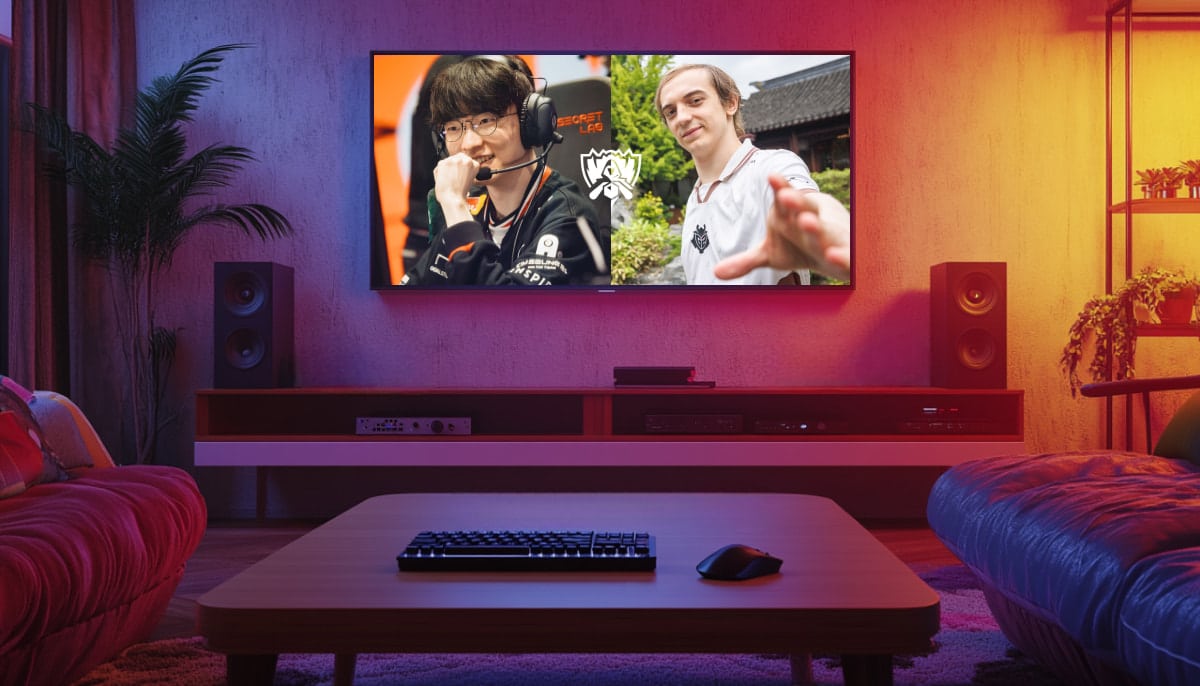
TL;DR
- Eastern regions (LCK, LPL) have dominated the LoL esports scene over the past decade due to better infrastructure and talent pipelines.
- While there have been instances of Western brilliance, they were often occasional exploits, and the gap hasn’t really closed in recent times.
- Western players don’t lack in mechanical skills in most scenarios, but in their ability to be consistent across a large sample of games.
- Bridging the gap requires investment in more talent development and a highly competitive environment to improve one another.
- In the short term, getting strategic edges is the way to make Western teams more competitive.
Aside from the first-ever World Championship in 2011, League of Legends esports has been dominated by the Eastern regions. Early on, it was Korea who took consecutive world championships before China claimed a few titles in 2018, 2019, and 2021. In recent years, the crown has gone back to Korea, with T1 winning back-to-back world championships.
While Western teams have shown occasional potential to upset the Eastern counterparts, there hasn’t been a squad that has been consistently able to fight the top dogs since G2 back in 2019. In fact, the West has struggled to even compete at the international stage, with glimpses of resurgence this year with teams like FlyQuest and Movistar KOI leading the charge.
This article explores the current state of LoL esports, the reasons behind the gap between East and West, and what the Western regions should do to close it in the future.
Current LoL Landscape
The current League of Legends landscape still shows a clear gap between East and West, with the LCK and LPL maintaining dominance through consistent international success at events like MSI, Worlds, and the newly introduced First Stand. Korean powerhouses teams, such as Gen.G, T1, and Hanwha Life Esports, have been consistently fighting for top-finishing positions more consistently than their Chinese counterparts, who have more ups and downs.
Western regions — despite their recent efforts in trying to close the gap — haven’t been able to get close. There have been some occasional upsets here and there, such as the latest G2 win against BiliBili Gaming at the Esports World Cup, but they are usually one-off exceptions, which are not good enough to take the teams to deep tournament runs.
Is it a problem, or natural?
The persistent gap between East and West has often been raised as a potential issue for the watchability of esports, especially now, where Asian teams are expected to dominate at every global event.
On one hand, having the same squads battle it out for the crown can feel repetitive and might discourage fans from underperforming regions. On the other hand, however, closing the gap should be seen as an additional motivation to figure out how to make the regional scenes more competitive.
Reasons for the gap
Eastern regions continue to outperform Western ones due to a couple of reasons. The first one is straightforward but fundamental: player base. Regions such as South Korea and China have cultivated the gaming culture for decades, and their player base has always been massive.
With over 130 million players globally, more than half of them come from the Chinese region. South Korea, although smaller, has treated LoL as a mainstream phenomenon since the game was released in 2009, and it’s the main region where young and talented players can get access to training programs, helping them improve their skills and reach peak individual performance at an early age. The academy structure in the LPL and LCK has worked for many years, with several players getting promoted to main teams or sold to tier-one teams in other regions.
In comparison, the Western regions have struggled to embrace the esports culture as well. Even though the acceptance has improved over the past few years, the player base is still not as big when considering the scale of the combined population. Europe is estimated to have around 25 million monthly players, while North America has around 15 million.
While Europe has produced great talents, their path to competitiveness is not as guaranteed, given the fragility and volatility of the European Regional Leagues. The same happened in North America in the past years, with only a few getting the promotion needed to push for competitive excellence.
On top of that, the Eastern Asian culture is often known for emphasizing results and success. The general social pressure from excelling in traditional fields like sports and academics also translates to a discipline like esports, which is almost entirely based on competition.
How can the gap be bridged?
Closing the gap between East and West requires a combination of short-term adjustments and long-term structural changes.
In the short term, Western esports teams must expose themselves to higher levels of play, either by scrimming against Eastern teams before any major tournament or playing against the other top Western teams. Analyzing and learning from the best is a good start to getting closer.
The other crucial step is to create a stronger talent pipeline, helping them quickly reach their peak individual potential. This can be done by having organizations build long-term secondary rosters that focus on improving rather than immediate results. It also opens up a scenario for teams to scrim in-house without revealing strategies or team compositions to other opponents, a common trend that happens in pro play.
Beyond that, a cultural shift is necessary. Esports must be seen as a viable career path, ideally supported financially so that young players and their families don’t just view it as a gamble. This will inevitably help expand the player base and increase the chances of producing the next generation of pros.
Is true parity possible?
Given how the gap has widened over the past few years, it’s unlikely that the changes will turn things equal again. That being said, the Western regions have already shown glimpses of excellence from their top teams, so there are positive signs to believe the West is moving in the right direction.
Conclusion
The gap is not the result of a single factor but rather the culmination of years of cultural, structural, and developmental differences. Korea and China continue to dominate because of their vast player bases, their winning-focused cultures, and better infrastructures, while Western regions have struggled despite moments of brilliance.
Yet, this imbalance is not unchangeable. With renewed investment in grassroots ecosystems, better training environments, and a cultural reframing of esports as a legitimate career path, the West will gradually close the distance.
Until then, international competition will remain defined by the chase—Western esports teams striving to match the same level of consistency as their Eastern counterparts. The question ultimately comes down to whether the West has the patience, resources, and commitment to finally make it happen.
FAQs
Has a team from Europe or North America ever won a major LoL tournament?
Yes. Fnatic won the very first World Championship in 2011, and G2 Esports won the 2019 Mid-Season Invitational. No North American team has ever won a global LoL tournament.
What LoL esports team is the best?
T1 is considered the most successful organization in League of Legends esports history, having won five World Championship titles (2013, 2015, 2016, 2023, 2024) with a strong record of fighting for the top spot over the past decade.
References
The post Where does the gap lie between Eastern and Western LoL teams? appeared first on Esports Insider.





