

TL;DR
- VALORANT maps overuse chokepoints and long sightlines, favouring passive play.
- Maps in VALORANT are designed with only Pro play in mind.
- Predictable layouts limit strategic variety and cause repetitive gameplay.
- Riot could improve the maps with a higher emphasis on tactical gameplay and broader testing.
VALORANT has quickly become one of the world’s most popular FPS esports, boasting a thriving pro ecosystem with constantly evolving agents and a diverse pool of Game Changers. Yet, while Riot has very refined gunplay and abilities, along with a competitive structure in and outside of the pro scene, there remains one issue that all players agree on: the design of VALORANT maps.
In its current state, we’re seeing extremely narrow chokepoints, rigid sightlines, and repetitive execution patterns, which, at first glance, may seem balanced, but in reality, they skew the competitive integrity. It favours certain playstyles and team compositions that limit the strategic depth of the game, which we’ve seen at VALORANT VCTs. If Riot wants to future-proof this game and esports, it needs to reapproach its map design.
Chokepoints & sightlines: How map design skews competitive balance
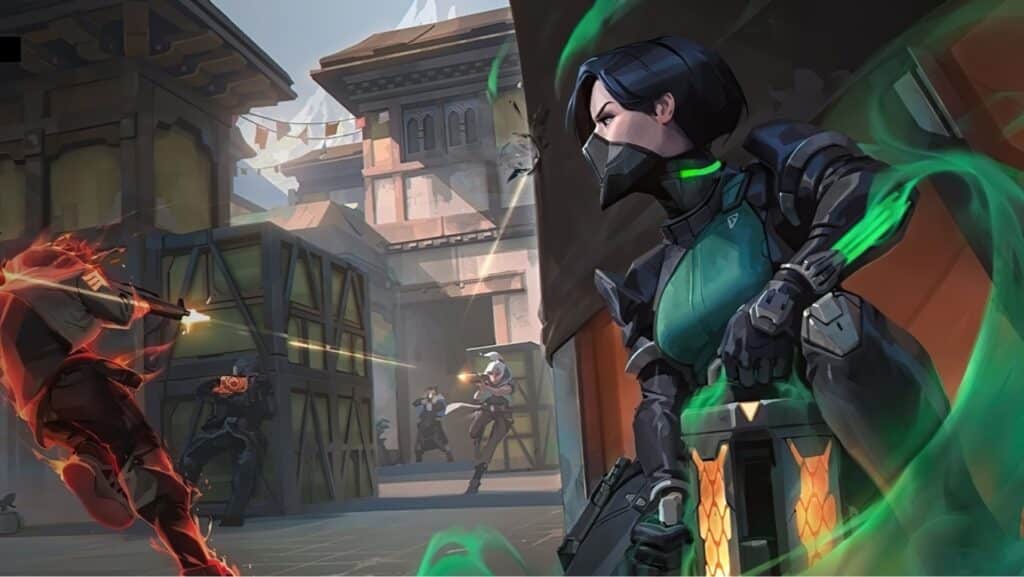
In many VALORANT maps, we see that, at its core, the game heavily relies on tight chokepoints and long, unforgiving sightlines. This leads to attackers being forced through these tight choke points, where we see utility spam for large portions of the round. This is essential rather than just strategic gameplay. This ultimately decreases the number of fights we see, and as spectators, we often watch players sitting behind endless smoke and flashes.
And when these smokes run out, we see Operators holding down the long sightlines, often locking down an entire side of the map. The Operators tend to thrive in these environments, especially when paired with the correct VALORANT Agents with the right abilities. This is making taking aggressive control of the map more risky and costly than a rewarding mechanical skill. Ultimately, these things encourage passive play rather than something more dynamic, which would be better suited as a spectator sport.
Pro play Vs Solo queue: Why maps work for one but fail for the other

Riot generally justifies the maps by how they perform in VALORANT tournaments, where all five players communicate perfectly, have established protocols, and utilise proper layered utility effectively. These teams know how to play the maps, how to fake, they have their set defaults, and how to trade effectively out on a site. The map works because of all these factors.
Solo queue is a different story altogether; communication is limited, often resulting in disjointed plays. Where players favour solo play over teamwork, the same maps that see the likes of Sentinels fly through with strategy become a punishing environment when a team of randoms is on the server, showing that these maps were made for VALORANT esports and punish the casual player.
This ever-growing disconnect highlights the fundamental issues Riot has created with these maps; balance is almost exclusively based around pro players, and it heavily undermines the player experience. Riot needs to think less about tournaments like the VALORANT Masters and focus more on the players who live their game every day.
Limited strategic variety: It’s getting boring
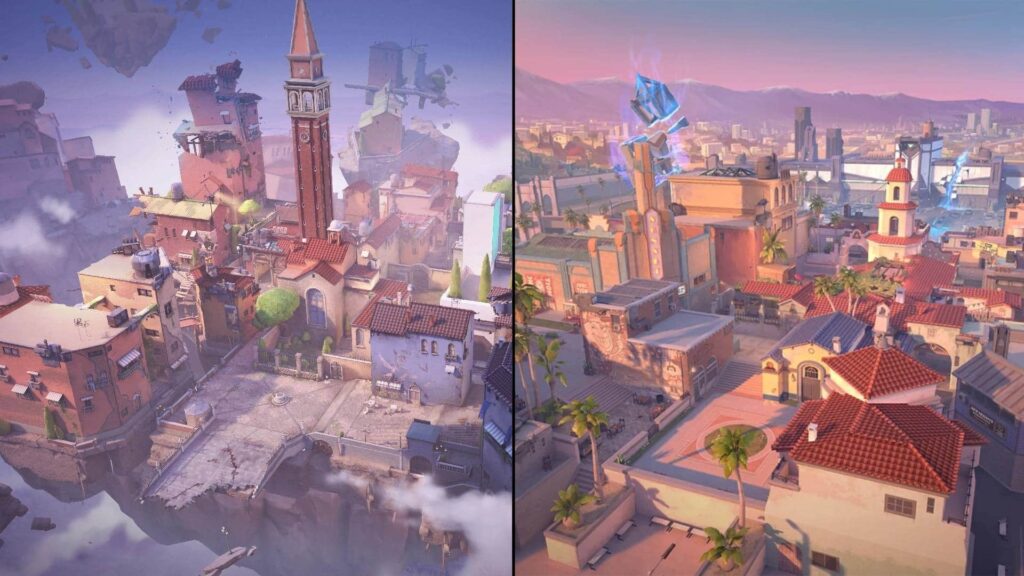
One of the most glaring issues within the current competitive VALORANT landscape is its increasingly narrow strategic diversity. With the chokepoints and sightlines mentioned previously, predictable bomb sites and limited routes to flank around, we end up seeing the same script being followed again and again. Utility-heavy executions and retake attempts all start to feel like déjà vu, as this brings even high-level play down to a checklist rather than creative plays and a battle of wits.
Teams trying to break this meta always seem to find themselves limited by the stale, rigid nature of the maps. There is little to no room for a team to find unconventional paths. While the VALORANT agents do bring a level of difference to the game, we still tend to see the same plays repeated. This is apparent across Pro play and Solo queue.
Even the new maps that emerge share the same characteristics and ultimately echo the same structural patterns that have been observed over the years. This all results in a meta that remains unchanged and quickly stagnates, even with the VALORANT updates that introduce new agents and maps. It’s all very much the same story after a while.
Opportunities for Improvement: What could Riot do better?
Riot needs to rethink map design in terms of how casual players will play the map, not just professional players. They can achieve this by reducing their overreliance on chokepoints and predictable sightlines, which would create a more engaging and dynamic environment that rewards individual plays while also valuing creative positioning.
Next, they could consider redesigning maps with layered tactical possibilities, creating spaces that support diverse approaches to the site. This would keep things interesting for players and spectators alike, allowing for more creative compositions and a wider array of agent use. This will give the space for teams to innovate.
Finally, they need to test these maps with both casual players and professional players before the official release. This will ensure maps remain accessible and enjoyable. For every level in the game, by creating cohesion between competitive and casual players, the game would appeal to a much wider player base and foster a more engaging and dynamic environment for both old and new VALORANT maps.
Conclusion
Ultimately, VALORANT’s map design prioritises pro play over casual enjoyment. The current layout rewards perfect team play and passiveness that is not apparent in solo queue, making the game unenjoyable in ranked play. It limits creativity and fosters a repetitive gameplay style where we see the same executes and plays over and over. Riot has the ability to create battlegrounds that challenge players while keeping the wider community invested in the game’s long-term playability.
FAQs
How many maps are in VALORANT?
Currently, in the active competitive pool, there are seven maps (Haven, Bind, Sunset, Abyss, Corrode, Pearl, and Split), although there are 12 VALORANT maps in total, which include the additions of Ascent, Icebox, Lotus, Breeze, and Fracture.
What VALORANT maps are active?
The Active maps as of December 2025 are Haven, Bind, Sunset, Abyss, Corrode, Pearl, and Split, though this is likely to change as Riot often swaps maps in and out of the competitive pool.
What is the best VALORANT map?
While there isn’t a single best map in VALORANT, the most common opinion is that Ascent is the best due to its balanced sightlines, strategic flexibility, and clear contestable middle. Traits that many maps lack.
What is the biggest map in VALORANT?
In terms of sheer size by playable area, Breeze is the largest map, featuring huge open areas and a large rotation between both sites, with everything spaced very far apart.
The post VALORANT map design is failing the competitive scene – Here’s why appeared first on Esports Insider.





