

- Casino.org interviews iGaming Ontario President and CEO Joseph Hillier
- Roll-out of new Centralized Self-Exclusion Program expected in first half of 2026
- AGCO adjusts gaming standards in preparation of CSE launch
One of the big items on Joseph Hillier’s checklist when he joined iGaming Ontario as its new President and CEO in August was pushing the igaming industry’s new Centralized Self-Exclusion (CSE) Program over the goal line.
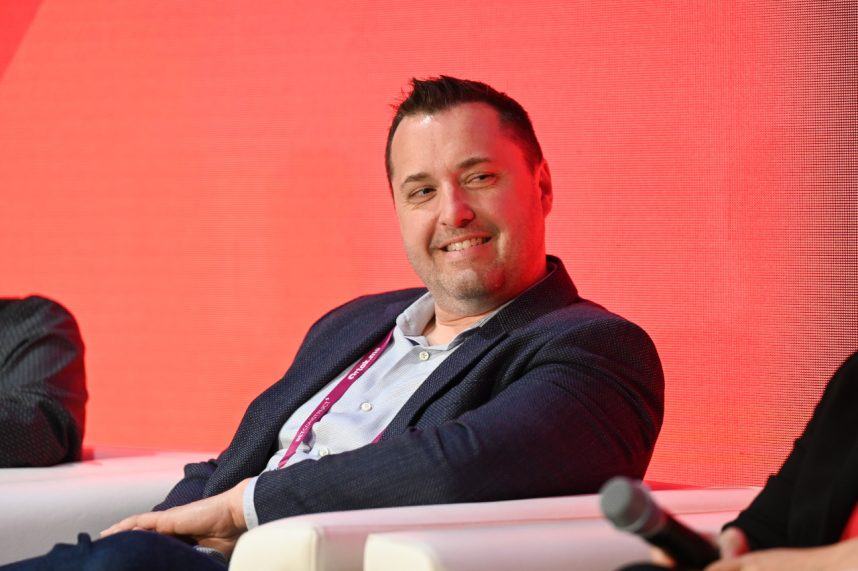
In a wide-ranging interview with Casino.org in his Toronto office this week, the long-awaited launch of a program where players in Ontario can voluntarily exclude themselves from all regulated igaming sites through a single, streamlined process will go live in the first half of 2026, Hillier told us.
Soon Ontarians won’t need to self-exclude across multiple platforms, with consistent safeguards built in across the entire landscape.
Program Long Overdue
I think everybody recognizes the system is long overdue, and so we’re working hard,” he said. “A lot of work has gone on over the last few months in terms of the build and working with operators on an integration plan. We’re quite confident that we’ll have a public facing system delivered in the first half of next year.”
The market has been waiting for the launch of a CSE Program since the news back in August 2024 that iGaming Ontario selected a joint bid by Integrity Compliance 360 (IC360) and IXUP to develop the system. IC360’s tech-first expertise in betting integrity has been exhibited through ProhiBet and IXUP’s demonstrated success with BetStop in Australia, iGaming Ontario said in a past statement.
AGCO Changes Gaming Standards
“Currently in the province, every operator has its own self-exclusion program, so we still have a very robust kind of safety net for players,” said Hillier. “But this will be that overlay, that additional layer for players, to allow them access to a one-stop shop and self-exclude from the entire system. It’s going to be a critical piece to our overall responsible gambling commitments and obligations. And it’s something that I think will be welcomed by the sector.”
Hillier added having a centralized system across the marketplace will give operators the confidence that when a player self-excludes once, they are fully self-excluded. That’s especially true if they’re looking at a player who is in crisis.
$9.33 Billion in Cash Wagers in November
The Alcohol and Gaming Commission of Ontario (AGCO) yesterday announced changes to the Registrar’s Standards for Internet Gaming, in preparation for the centralized system launch. AGCO introduced a new CSE standard (2.14.1) laying out requirements for regulated operators and iGaming Ontario post launch.
The robust Ontario igaming market, which topped CAD $9.33 billion in total cash wagers in November, features 48 licensed operators, and 82 gaming websites, currently, with more coming down in line, Hiller said. Others might leave the market, as well, as part of a maturity curve, but more operators are likely coming in.
On Alberta
The industry is of course setting their eyes westward on the launch of an Ontario-style, regulated igaming market in Alberta in 2026, a situation Hillier says he’s obviously keeping a close eye on from his desk in Toronto. There’s very keen interest among operators, he said.
We’ve always made ourselves available to chat with Alberta, share our lessons learned, where we can collaborate,” said Hillier. “It’s in everyone’s interest for our markets to be talking to each other. Ultimately, Alberta is going to have to make the decisions that are right for their market and their jurisdiction, but where we can share some of the things that we’ve learned along the way, centralized self exclusion is a great example, we’re certainly keen to do that.”
Opportunities via inter-provincial liquidity will be a focus when Alberta goes live, he said.
On Bill s-241
Bill S-241, sponsored by Senator Scott Tannas, would amend the Criminal Code and the Indian Act, providing the governing body of a First Nation exclusive authority to conduct and manage their own gaming operations within its lands. Indigenous gaming has been under the control of provincial regulators. That bill is making its way through Parliament (currently at second reading in the Senate), with obviously big ramifications for the Ontario market overall.
“We’re watching it, of course, and looking to see what those impacts are, like we do with any federal legislation. We would also largely defer to the Ontario government in terms of their approach to those kinds of issues,” Hillier said.
On Prediction Markets
This morning, the big news out of the U.S. igaming market was DraftKings entering the predictions market with the debut of its prediction app, under the oversight of the U.S. Commodity Futures Trading Commission. Prediction markets like Polymarket are banned in Ontario. Butt with big operators like DraftKings embracing it, pro sports leagues like the NHL doing deals with prediction market companies, and projections of a trillion dollar market size, it makes one wonder about what that holds for Ontario.
An industry source poured cold water on all of this for Ontario, citing the variety of sports betting platforms available to players in the province. Ontario doesn’t have a cap on the number of licensees who can jump in.
In terms of our role as conduct and manage in a gaming space, it’s still a wait and see for us,” he said. “It’s a conversation that government will ultimately have to have in terms of what that looks like. But of course, like anything in the gaming space that relates to our operators or to our players, we’re going to watch it very closely. But at this point, it’s still waiting to see what this actually means and where this ends up landing with government.”
Looking Forward to 2026
Hillier said he had his eyes opened at the G2E conference in Las Vegas in October, meeting with 16 operators who were “really interested” in entering Ontario. The objective is to be more of a business partner for operators, leaning in on technological advancements in areas like centralized self-exclusion and in the anti-money laundering sphere. They are looking at automation capabilities, including utilizing AI, removing some of the reporting burdens for licensed operators here.
“I’m really laser focused on our own regulatory framework, and where can we be making sure, with our own operators, that the cost of compliance, streamlining, red tape reduction, the burden level, is low enough that they can continue to really succeed here,” said Hillier. “Because ultimately, that’s my biggest priority.”
The post iGaming Ontario President: Centralized Self-Exclusion Program Coming Soon appeared first on Casino.org.





